A Shared Way to Plan Alumni Network Success
Across hundreds of programs, the strongest are those that build credible paths toward the outcomes that matter most to their business. Our Alumni Network Maturity Model is an effective way to see where yours could go next.

Alumni Programs Have Grown Up. How We Assess Them Should Too.
A decade ago, most alumni programs were experimental: a LinkedIn group, a spreadsheet kept by whoever cared most, maybe an annual reunion. That has changed: programs now have owners, platforms and expectations, and the question has shifted from whether to stay connected to how well it is being done.
What the field has not had is an objective way to answer that. Counting activity, events held, newsletters opened, says little about whether a program is built to last.
The Alumni Network Maturity Model gives that picture a shared shape and a shared language. It shows where your program is strong, where it is thinner than you would like, and what the next stage looks like, in terms your stakeholders already recognize.

Six Dimensions, One Picture
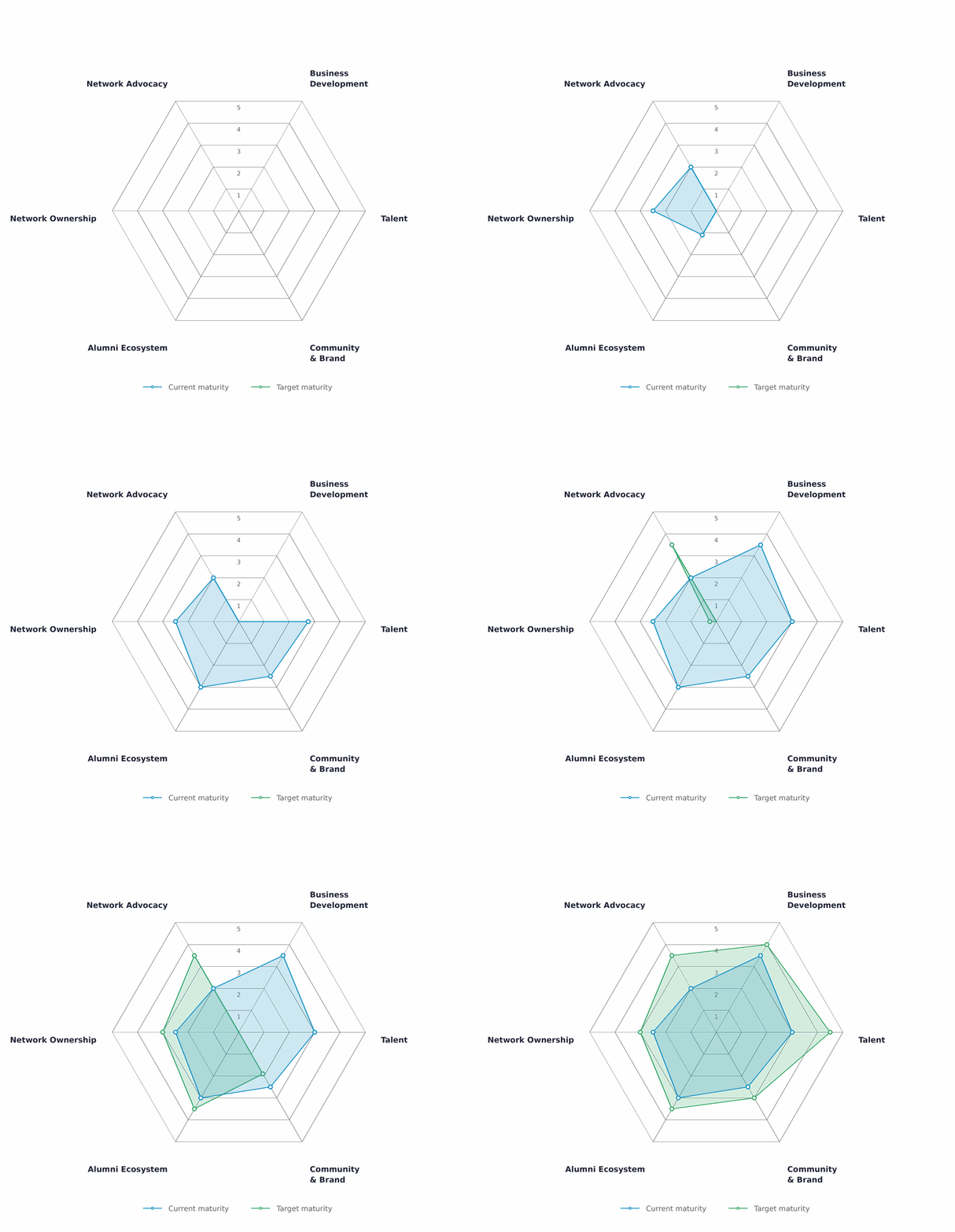
The model looks at an alumni program across six dimensions and plots them as a radar chart. Each dimension is scored on the same five-point scale, so you can compare dimensions fairly and track movement over time.
Many organizations plot two lines: where they are today, and where they intend to be over the next 6 to 18 months. The space between those two lines is where the useful conversation tends to happen.
The six dimensions fall into two groups. Three are foundations, the conditions that value can build on. Three are returns, the outcomes you are most often asked to evidence. The returns rarely hold up for long without the foundations beneath them, which is why the shape matters more than any single score.
The aim is not a five on every axis. It is to understand which dimensions matter most in your context, and whether you are genuinely investing in them.
Foundations | What Lets Value Flow
Network Advocacy
Whether senior leaders visibly believe in the network and say so, or simply tolerate it in the background.
Network Ownership
Whether someone owns the program with a genuine mandate, or it runs on goodwill in the margins of another job.
Alumni Ecosystem
How joined-up and intentional the alumni experience is, from a spreadsheet to a connected ecosystem that serves different alumni well.
Returns | What Stakeholders Ask About
Business Development
How intentionally alumni relationships are turned into introductions, opportunities, and growth.
Talent
How deliberately alumni are treated as a talent pool, for returners, referrals, and roles that are otherwise hard to fill.
Community & Brand
Whether your alumni community shapes your reputation by design, and your alumni affinity can be measured.
Some Questions to Consider
An appraisal of where you are right now is of the greatest value. Here are a few questions for each dimension: consider them yourself, take them to your team, or put them in front of senior executives. If some answers are uncomfortable, that's normal, and the gaps are almost always structural.
Network Advocacy
Whether senior belief in the network is visible and durable.
- Do you have a named senior sponsor for the alumni network?
- Do they champion it visibly, internally and externally, or support it quietly?
- Is that sponsorship succession-proofed, or tied to one person staying in post?
Network Ownership
Who carries the program, and whether they are set up to succeed.
- Is there a named owner with a clear mandate, or does it sit side-of-desk?
- Do they have the budget, roadmap, and cross-functional access to move things forward?
- If that person left tomorrow, would the program continue? Is there a succession plan for it?
Alumni Ecosystem
Where alumni actually gather, and how well that experience is held together.
- Where do your alumni gather today: somewhere you own and shape, or channels you have no real control over?
- Does your alumni data flow in automatically, or depend on someone remembering to update a list?
- Does the experience reach alumni the way they actually live, by segment, device, and relevance, or is it one message to everyone?
Business Development
How intentionally alumni relationships turn into opportunity.
- Do you know where your alumni have landed: which clients, partners, or institutions?
- Does that intelligence reach the people who could act on it, ideally before a pitch?
- Are alumni-influenced opportunities captured and shared, or simply assumed?
Talent
How deliberately alumni feed your talent pipeline.
- Do you know what share of hires are returning alumni, and does anyone senior ever see that number?
- Do former colleagues hear about relevant roles before the open market does?
- Is alumni talent part of workforce planning, or does rehiring happen ad hoc?
Community & Brand
Whether your community shapes reputation on purpose.
- Do you know which alumni are already advocating for you, and what prompts them to?
- Is engagement measured against brand goals, or only opens and attendance?
- Could an alumni group you do not own be shaping how you are seen, without you in the room?
When you want to assess further, we'd be glad to talk it through
If those questions surface something worth exploring, we are happy to map your program against the six dimensions together and share how similar programs have moved forward. Either way, you will leave with a picture you can put in front of your own stakeholders.